

The 8th Edition
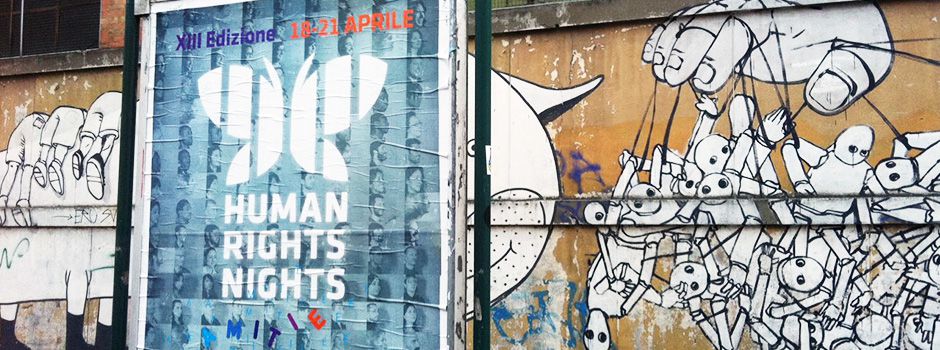
The eighth edition of Human Rights Nights, Festival of Cinema and arts dedicated to human rights issues, is dedicated to Resistance - (Sopra)Vivere , in homage to all those who fight in order to survive in situations of war, colonialism, slavery, poverty, and against all the difficulties and alienations of the daily life in the contemporary societies. We refer to the term resistance in its widest sense, focusing on the strength of those involved, which grows through their actions of challenge and human dignity. The Festival does not introduce victims but warriors of peace and justice, who are able to communicate an alternative path to that of violence. Each year the works introduced within the festival increasingly reflect the interconnection between groups of people who share the same social difficulties, a movement, that thanks to this solidarity are now global in nature, and in turn those involved feel less alone in their daily resistance. Also as a small festival of cinema in Bologna, Italy, can be a point of reference and inspiration: through the net of international relations established and the acknowledgment of the festival from the international industry of the cinema of human rights and from part of the local communities. Human Rights Nights is increasingly achieving its goal to become a kaleidoscope of various artistic expressions that testify to the courage and give example of people who resist and survive in extreme conditions of injustice, poverty and danger.
At the heart of the festival is the international competition of feature films, documentaries and shorts. Which will be in line for prizes as judged by an international jury composed of directors of various "festivals of human rights" from around the world, film critics, artists and human rights activists. This years competition includes: The stories of the prostitutes of Phnom Penh (papier of peut pas envelopper the braise by Rithy Panh); The business of diamonds and water (Diamond Road by Nisha Pahuja; Agua me Sangre di Jaroslava Colajacomo); The resistance of the Ogoni communities in Nigeria against oil multinationals (Delta Oil' s Dirty Business by Yorgos Avgeropulos); The fight for justice at Marzabotto, the bloodshed that has gone unpunished on the hills of Bologna, Mont Sole, in 1945. (La colonna senza fine di Elisa Mereghetti e Valerio Monteventi); The difficulties of the Romanian families in Bologna (La colonna senza fine di Elisa Mereghetti e Valerio Monteventi). Outside the competition, the documentary of denouncing the violations of the atmosphere, 11th Hour by Nadia Conners and Leila Conners Petersen, produced by Leonardo Di Caprio. In celebration of the 60th Anniversary of the declaration of Human Rights, the precious works of UTET Editori, The Encyclopedia on Human Rights (2007) will be presented looking at the rights to life, food and the freedom of expression.
Human Rights Nights Festival Film will open with the preview of the film The Hunting Party by Richard Shepard, with Richard Gere that, ironically, faces the topic of the search for justice following the violations of human life in Bosnia. The stars of Hollywood are more and more sensitive to human rights issues and engage their own image with the intention of awaking public opinion, or to raise funds, wherever the crisis may be, from the conflict in Darfur, to the AIDS epidemic throughout the world. The photographic exhibition Diritti Umani a Hollywood - Human Rights in Hollywood, in collaboration with UTET Editori Spa and Photomovie, represents a ‘meeting’ unique to the the Arts. Bamako, a film by Abderrahamane Sissako, which will close the festival, introduces the audiences to the international courts. Bamako puts under the spotlight the World Bank and the International Monetary Fund, making light of the devastating effects of their programs in Africa.
Together with Amnesty International, we will highlight the campaigns in action in the world against the torture and the capital punishment; through the films Rendition by Gavin Hood and In prison my whole life of Mark Evans. The rebellion of those excluded and marginalized in society is presented through a futuristic underground of Exodus directed by Penny Woolcock, while in Africa Paradis by Sylvestre Ammoussou proposes a surrealistic and upside down vision of a western world which has been struck by wars and poverty, with mass emigration from the North towards Africa, Asia and the Latin America. The director Phillippe Aractingi introduces the film of Sous le bombes on the effects of the bombing by Israel in Lebanon that caused over 1000 deaths in the summer of 2006. Fernando E Solanas will be present at Human Rights Nights for the preview of his latest film Argentina latente. More from Argentina, the director Ingrid Jaschek introduces her documentary Un claro dia de justicia on the process of the crimes perpetrated against the Desaparecidos. Within the other titles to be screened, Vogliamo anche le rose of Alina Marazzi is a documentary on the feminine emancipation in Italy in the 70s, Ezra by Newton Aduaka looks at the topic of the children soldiers – and on the same subject matter, we will present the documentary War Child by Karim Chroborg, further to these Om Shanti Om di Farah Khan, is a celebration of Bollywood and its music.
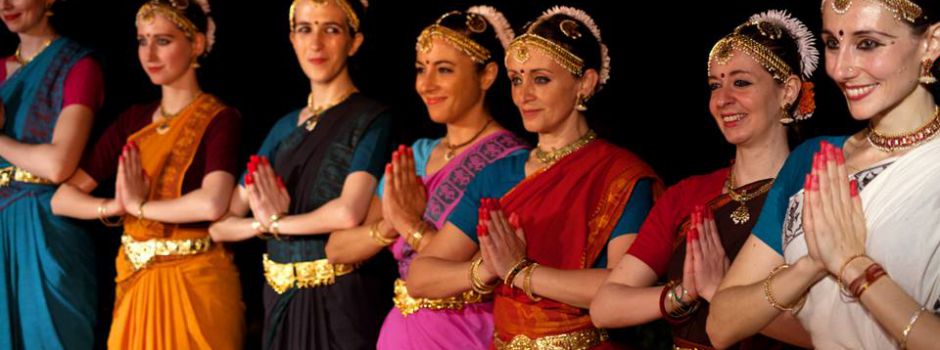
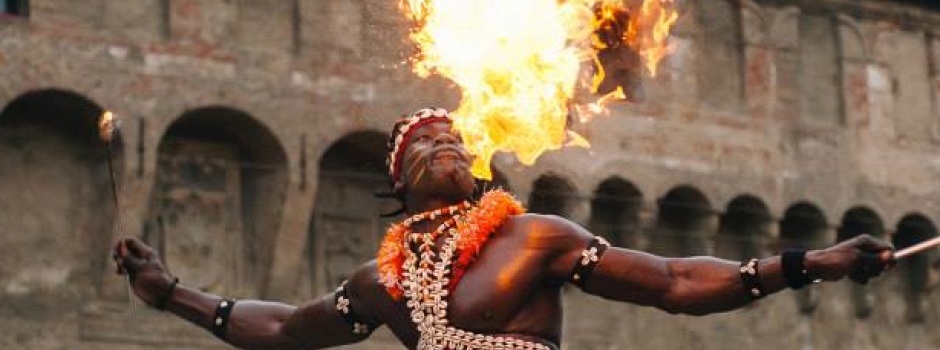
Moving beyond being just an encounter with artists and directors who use film, to include music and arts in a generalized manner in order to denounce the violations of the human rights, Human Rights Nights increasingly constitutes a privileged vessel of varied artistic mediums from the city and the various expressions of the communities that "live it". The evenings of AfricanBamba will introduce percussionists from Senegal, and MCs/Sound System Afro beat and Reggae Roots: The Tamburi di Goreè and Ghetto Eden at the TPO, Yakar Soppe Serigne Fall at Vicolo Bolognetti and the Sound System of Mongardino Posse, Dj Raba, Chris Jamaica, Dj Salento, Prince Angel, Rasta Mahmoud, Papi & Bless. The day Salam Namaste Mela importantly gives a platform in Italy to prestigious musicians from the South Asia: in the splendid location of Piazza Aldrovandi where they will exhibit: the Bangra percussionist Hasda Nachda Punjab, the traditional music of Sri Lanka and Bollywood of UNGA, the Katakhali dance Hanuman: il Re delle scimmie from the company of Teatro dell’Albero, music from the Bangladesh of ASCBMBI, and in the evening Punjabi MC, Dj Happy. Music represents a wide section of the festival, with performances of jazz, acoustic afro-Latin, reggae and Hip Hop within of HRNs Café in the Courtyard of the Cinema Lumière.
At a local level, the objective is in fact that to be increasingly involved various "fragments" of the city, a city space that is enriched from the variety of origins and artistic-cultural traditions of its citizens. As well to create opportunity of spaces in order to develop, together with, importantly, dialogue as one new Bologna, where all are felt to be recognized and to play an important role. This aspect of participation is therefore one of the priorities of the Festival, to in fact work together with the main foreign communities of the city, creating relations involving exchanges and mutual inspiration. The wealth of knowledge in these submerged artistic communities is still not recognized enough, investing in the festival the value the new citizens, and at the same time to involve them in arguments on themes that often stem from places and situation they have lived in first person. Partnerships with AfricanBamba and the artists of Salam Namaste Mele, like the performance of the Teatro dei Rifugiati in the concluding evening of the festival along with the Compagnia del Teatro dell’Argine and the presentation of the prize of the Fondazione Cassa di Risparmio in Bologna, promoted from Cinema South East for the filmmakers from outside of Italy in bologna, are only some of the appointments that, in the acknowledgment of the strong potential that originates from a plural expression of the city, and in pursuing a positive representation, directed and profound images that are dissociated from those put across by the media, which are often to often superficial, increasing render the festival to be unique.
Continuing within the field of participation, the festival continues with the project Youth & Human Rights. This began like an experiment last year with a few high schools from Bologna and the Dozza Prison, this year it has been extended to include the “public community of the minors”. The students of the schools and prison form they a jury that decides on the prizes for the Best short film. The spirit of Youth & Human Rights is one of dialogue in order to succeed to hear the aspirations, the dreams, and the worries of the young people. The encounters with those who have lived in first person situations of deviance or degradation that led to periods of detainment guide us in trying to understand the origins of their uneasiness, and their view often leads us towards aspects that we would perhaps not have considered. The boys of the public community of the minors tell through a planed self representation-video (the communautè), whose images turns from themselves in the same frame to their ' new family' and ' house', while waiting to grow for being able to resume school and a job.
The collaboration of Human Rights Nights with the Soweto Arts Festival in Soweto, South Africa is born from a similar spirit of participation. It has carried to the birth of Bologna-Soweto young artist exchange program: young filmmakers and musicians of Bologna have visited the Soweto Arts Festival in December 2007, and this year in April we are honored to welcome the young filmmakers and musicians of Soweto. The filmmakers (The Sponk Studio, Musa Boto and Dumikatso Rahoto) have worked together on a collective film, whose first part, with the images of the urban spaces from the South Africa will be introduced at Lumière Cinema. Between these images there will be also a short film shot at the community centre of Ipelegeng in Soweto, interpreting and created by children from 4 to 16 years. The second stage of the documentary, with the images of Bologna will be introduced in Soweto next December. The Italian musicians, Electric Sheep, have played with Embedded an experimental jazz that came together for performances in Soweto, Johannesburg and Pretoria during the festival in December. The presence in Bologna during the festival of the management of Street Pop Industry will allow preparation to begin in order to invite South African Hip-hop to Bologna in the future and to create a further exchange between the cities. The closing party of the festival with the MC of AfricanBamba and Mic Meskin could be therefore an important encounter occasion. At the events of Soweto Day, the general counsel of the Republic of the South Africa, Dr. Nvuyo Nokwe will be present.
At an international level we want to strengthen the international network of Human Right Cinema Festival around the world, the Human rights Film Network. This is growing in dimensions and now it involves 20 festivals in Europe, Asia, Africa, America and Oceania, with the expectation of doubling the number of its members next year. This reflects both a growing in the serious initiatives around the world for the expression of the subjects of Human Rights through Cinema but also a strengthening of the contact between our festivals with activities in the major international festival such as Venice (Human Rights Films Network Award) and Berlin (Human Rights Award at the Cinema for Peace). As well as at a level of bilateral exchanges between the festivals and through online platforms, for example the Babelgum Online Film Festival, promoted by spike Lee (to which human rights nights is associated with a new partnership).
The role of the festival of cinema and art for development and the strengthening of the community and representations is discussed with the directors of the Rwanda Film Festival/Hillywood, Eric Kabera; of the festival del Cine y Video de los Derechos Humanos in Sucre, Bolivia, Humberto Mancilla; Street Pop Industry and the Soweto Arts Festival, and the director Addis Abeba International Film Festival on Just and Sustainable Development, Kebour Ghenna. Human Rights Nights has with each one of these festivals a privileged relationship in order to be inspired, and to grow in its own expression from the strong collaboration in various contexts.
Included in the workshops presented at the festival this year are: the special event dedicated to Monte Sole and the search for justice for the victims of the massacre of Marzabotto, con the participation of lawyers that have represented the victims, their families and the mayors of the communities of Monte Sole at the last hearings in 2006. The projection will be repeated during the Italian liberation day on 25th April at Monte Sole.
We are honored to host during the festival the presentation of some recently released important books and publications, including Fantasmi. Dispacci dalla Cambogia by Tiziano Terzani, Sulle regole by Gherardo Colombo, the essay Marketing rappresentazione dei conflitti: media, opinione pubblica e costruzione del consenso a cura by Roberto Grandi e Cristina Demaria, the latest release of the publication LatinAmerica edited by Gianni Mina, who will be present at the festival to introduce the documentary Fidel cuenta il Che e Un giorno con Fidel. Also importantly will be the lectures presented on Security and Human Rights by Prof. Rosenfeld from the Johns Hopking University, and lectures of the representation of conflict, fair trade and workers rights at the Polo Scientifico-Didattico at Forli
The Meeting about spirituality in the world, Come le dita di una sola mano, will include the participation of Lama Geshe Tenzin Temple, together with the representatives of the Christian, Jewish, Muslin, and Baha’i religions. The continuous violations of human rights in Tibet, currently made visible by the protests started by the buddest monks Darhamsala and the tragic resulting violence in Lhasa, are underlined by the presentation of reportage images together with the ones of the monks of Myanmar. Lama Geshe Tenzin Tempel will offer a benediction to the festival, as homage to the courage and the strength of all who survived against the violations of human rights and that fight for justice and peace.
This meeting expresses the ‘mandala’ of the festival, also interpreted by the artists, Wanda Benatti, with her work Mahamudra, tra cielo e terra; Guy Lydster, with the poetic sculptures of Headscapes, is expressing the panoramas that people carry in their heads, to resist and to imagine; The human form in metal and wood by Moussa Traore have inspired the fabric of the new collection Njadxass by Birama Kara Leye and Angela Caporale that will be presented at the catwalk performance Art Couture; The images from the world of the collective photography show Blinking on the World, offering images from Brazil, India, Palestine, Vietnam and South Africa, collected by the photographers Laura Frasca, Giovanna ..., Emiliano Facchinelli, and The Sponk Studios. Further more the inspiration and denouncing coming from the photographs of the project Positive Lives, about the HIV epidemic in the world (in collaboration with Cestas); The Installation Permanent waiting Room, at TPO of the international project Living on the Boarder. Concluding the artistic exhibitions are the sculptures in Iron and Recycled material by Maktar Silla and the living wood of Jò Parise, which will be displayed in the courtyard of Cinema Lumiere. Here also there will be HRNs Cafe, another meeting point with the participation of the city radios through Human Rights Nights Live FM / Media Centre of the festival, and a daily program of music and lectures.
.
The festival is promoted by Commune di Bologna, Cineteca di Bologna and Alma Mater-Studiorum / Università di Bologna, with the support of Assemble Legislativa Regione Emilia-Romagna, Fondazione Cassa di Risparmio in Bologna, and the sponsorship of UTET Editori Spa (www.dirittiumani.utet.it). The festival would not be possible without the collaboration of: Center for Constitutional Studies and Democratic Development, Unibocultura, Polo Scientifico-Didattico di Forlì – Università di Bologna, Scuola Superiore di Lingue Moderne per Interpreti and Traduttori di Forlì – Università di Bologna, Dipartimento di Musica e Spettacolo, Quartiere Santo Stefano, Quartiere San Vitale, Amnesty International, Centro di Studi sulla Cultura, le Lettere e le Arti Canadesi, Soweto Arts Festival, Scuola di Pace di Monte Sole, Maison Française, Mikado, Fandango, AfricanBamba, TPO, Locomotiv Club, Sesto Senso, LazzaRecords, Cafè La Linea, Le Scuderie, Scolopendra, Tay Ethnic Group, Compagnia Teatro dell’Argine, Cerensig, Cestas, Associazione Allegra, Internazionale, Il Tamburo, Asterisco Radio, Radio Fujiko, Radio Kairos, Radio Città del Capo, Più Donna parrucchieri, Ottica Paoletti, Associazioni Studenti di Forlì: Koinè, Aegee, Udu and Cactus.
However, overall the festival draws its vital life from he people that create it, from the directors and the artists, the directors of the festival and critics of cinema, the experts on human rights and the people who we cross and meet in the everyday life, and especially from the precious team of Human Rights Nights, that every year miraculously survive in the rebirth of the festival. To all of these beautiful people a thank you from the depth of my heart.
Giulia Grassilli
Artistic Director
Human Rights Nights
2nd Edition
3rd Edition

Music
Human Rights Nights will feature Music 4 Resistance through a live radio HRNs Live FM, as well as live acts of jazz and afro-beat. Soweto jazz musicians and the MCs di AfricanBamba, as well as Bangla Djs are among the gigs in consideration.

Arts
As every year, the theme of Resistance will be addressed through arts and photographic exhibitions, as well as fashion shows. This year we are in contact with the Canadian artist Guy Lidster, who is working on the project of public art and sculptures Headscapes, as well as with various photographers and an original Senegalese fashion designing studio based in Bologna.